
Freshwater
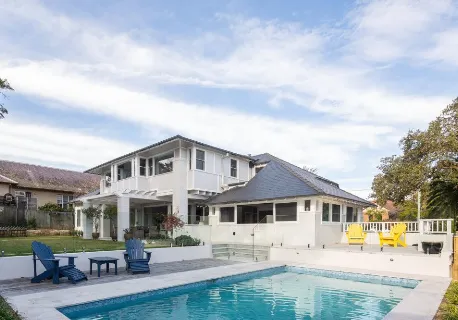
Concept: Creating a light, airy, character-filled three-level Hampton-style beach home on a small corner site

Lane Cove offers residents one of the more picture-perfect streetscapes on Sydney’s North Shore. With peninsulas, bushland, waterfront locales, and a charming village, it is an idyllic setting for families who crave the community feel. Unsurprisingly, the council has stringent planning controls to protect its mature trees and stunning waterways that influence the area’s character.
The council directives are reasonable and transparent for homeowners. They value sustainable living, and designs that enhance the environment and preserve the existing character generally receive favourable outcomes.
This article outlines some primary planning considerations for the Lane Cove Council catchment area. Feel free to visit our other articles on North Shore Sydney, Hunters Hill, and Willoughby councils.
Lane Cove is between Lane Cove River, offering an endearing leafy canopy and the highly valued bushland reserves. Its inhabitants understand the rare marriage of suburban repose with an easy connection to urban amenities. Walking the streets, you’ll find large housing lots and plenty of landscaping that uses natural fauna. It processes a strong bond with the community with forward sustainability thinking.
The Lane Cove Council planning controls are explicit and can seem inflexible. However, working within the guidelines, designing with ecological sensitivity, and showing a high degree of architectural intelligence regarding the natural landscape have every opportunity for success.
The Lane Cove Council takes these considerations seriously. The LGA is within bushland, and bushfire risk is non-negotiable for properties in Lane Cove West, Northwood, Greenwich, and Riverview. The Bushfire Prone Land parcel is under New South Wales RFS regulations’ jurisdiction, including a mandatory bushfire attack level (BAL) assessment. When located in these areas, the design may need to include adjustments, including boundary setbacks, fire resistant cladding and glazing upgrades.
Considering these controls as opportunities rather than constraints opens unique possibilities, including using steel and outdoor designs incorporating native plants and stone terrace constructions. For clients in the Lane Cove LGA, Playoust Churcher Architects collaborates with experienced bushfire consultants during the design process, ensuring the application addresses all the regulatory compliance requirements.

The Lane Cove LGA is a leader in developing environmental policy focusing on sustainability. All new developments and major renovations must comply with BASIX and NatHERS energy efficiency standards. The council does favour going beyond the minimum. Additionally, their Water Sensitive Urban Design (WSUD) guidelines promote stormwater harvesting, permeable surfaces, and on-site detention systems (OSDs) aimed at reducing runoff and protecting waterways. PLayoust Churcher Architects integrate rainwater tanks and clever roof orientation to maximise solar installations along with cross ventilation initiatives.
The Lane Cove LGA jealously guards its urban forest. It is known for its tree canopy and bushland, and the council’s protection policies are strict. It will enforce its Tree Preservation Order (TPO), which applies to the majority of trees over 3m. Any removal requires approval, which can mean an arborist assessment.
We design using existing trees as a statement. Rather than fighting against them, we use them to inform the landscape design and incorporate other council mandates, including water absorption, biodiversity and soil depth. Strategic inclusions like outdoor rooms, pools and setbacks create private retreats that our clients consider highly advantageous to their lifestyle and property value.
The LGA of Lane Cove does not have the same number of heritage conservation areas as other councils on Sydney’s North Shore. However, it enforces its guidelines to protect the area’s streetscape. Designs for new developments or home renovations and additions must adhere to streetscape compatibility. Size, materials, heights, and roof forms are key considerations.
Our experience in Lane Cove is essential, and we incorporate intelligent design techniques to overcome spatial constraints. Split levels, raked ceilings, and clerestory windows add volume, light and flow, overcoming some existing limitations.
We stated that Lane Cove Council is resistant to overdevelopment. However, the amendments to the zoning laws make the development of secondary dwellings easier to apply for. Approval is at the council’s discretion, and architectural integrity is paramount. Considerations include lot size and setbacks.
In lieu of these amendments, Playoust Churcher Architects has developed creative solutions: detached garden studios, garage conversions, or compact two-storey pavilions overcome a number of planning obstacles. We’ve designed dual-dwellings blending form and function that meet the demands of multi-generation living requirements and add economic value to the property for future sale potential.
While Lane Cove’s planning controls are changing, they remain complex, with the view to protecting the fabric and character of the area. We have worked closely with the council for a number of decades and have an intricate knowledge and understanding of the inner workings and how to navigate and, in some cases, circumvent challenges for complaints and lifestyle-desired homes. At Playoust Churcher Architects, we see the challenge as an opportunity to stretch the sites possibilities and create design and process driven new builds and renovations that stand the test of time.

Playoust Churcher Architects is a Sydney-based firm specialising in residential heritage and contemporary renovations, outdoor extensions, and new building developments. An integral part of your journey with us is our comprehensive process approach, tailored to meet the demands of our clients and council regulatory frameworks. Our team is well-positioned to maximise livability and financial return and is committed to delivering value that minimises risk and ensures projects stay on schedule and within budget.
We invite you to view our case studies and to contact our team for a comprehensive consultation on your project.
Lane Cove Council enforces guidelines on zoning (typically R2 residential), floor space ratio controls, height, setbacks, heritage or character overlays, stormwater management, and vegetation protection. Understanding these rules early is crucial for successful planning.
Subdivision and dual occupancy are possible where zoning and site conditions allow. However, compliance with setbacks, lot width, parking, and density is vital. We offer feasibility assessments to clarify what’s permissible.
Yes. Many streets in Lane Cove fall under character overlays, especially in Federation or Interwar-era precincts. Modifications often require a Heritage Impact Statement and considerate design to maintain streetscape integrity.
Parts of Lane Cove are subject to bushfire-prone land and flood planning zones. Overlay controls may affect building siting, materials, drainage and landscape response. We manage these controls from feasibility through to DA approval.
Timeframes vary depending on project complexity, overlays, and consultant requirements. Typically, heritage or subdivision projects take between 4 to 8 weeks for DA approval once documentation is complete.
Start with a feasibility session so we can evaluate your site’s zoning, overlays, and potential development scenarios. From there, we’ll guide you through design concept, DA preparation, and approvals.

Subdivision within Heritage Conservation Areas (HCAs) is strongly discouraged under council controls—primarily to preserve architectural styles, streetscape consistency, gardens, and heritage features. Any subdivision requires heightened attention to historical context.
The first essential step is commissioning a qualified heritage consultant. This expert-led approach ensures the collective understanding of historical values, community context, and regulatory constraints before any design or subdivision consideration.
Playoust Churcher emphasizes extensive research, including surrounding streetscape patterns, existing block subdivisions, and heritage item assessments. This groundwork helps ensure that new divisions align with local spatial rhythms and visual language.
Any new subdivision must retain original block widths, landscaping, views, and natural site contours. The goal is to avoid alterations that disrupt the essence of the heritage area or diminish its character, ensuring new development feels cohesive rather than intrusive.
Managing Director & Nominated Architect
NSW Architect Registration No. 5924
With over 30 years of architectural experience, Brett Churcher leads Playoust Churcher Architects with a rare combination of design expertise and commercial insight. As a registered architect and Managing Director, Brett has played a pivotal role in delivering high-end single residential homes and boutique medium-density developments across Sydney’s North Shore and beyond.
Brett’s unique strength lies in his deep understanding of both architectural design and the Sydney property market. His valuation background enables him to align creative vision with practical feasibility, ensuring each project achieves both aesthetic excellence and financial viability.
At Playoust Churcher, Brett drives the studio’s growth, strategy, and leadership, while remaining closely connected to what matters most: the client. His ability to see the bigger picture from a client’s perspective and to guide projects seamlessly through the design process is at the heart of his role and reputation.

Reach out to Brett to explore how Playoust Churcher can bring it to life—with clarity, creativity and confidence.

Concept: Creating a light, airy, character-filled three-level Hampton-style beach home on a small corner site
Concept: Adapting a beautiful family heritage home in a quiet street on a large site to suit the family’s lifestyle

Concept: Designing a new family home that maximises the views and introduces a sense of open space

Concept: A complex yet successful renovation of this stunning heritage home in a conservation area

Concept: A 1970s build transformed into a bright, open design maximising stunning harbour views

Concept: A complete rebuild of half the property over two levels, whilst also incorporating the property next door

Concept: A majestic holiday home that pushes the design envelop, blending sustainable materials and natural light


Concept: A major ground floor renovation of a large estate with a new three-car garage and 14 metre pool

© Copyright Playoust Churcher 2026 All rights reserved. Website by Brilliant Digital.
We live and work on the lands of the Gadigal people of the Eora nation. We acknowledge their traditional custodianship of the land and pay respects to their Elders past, present and emerging.