
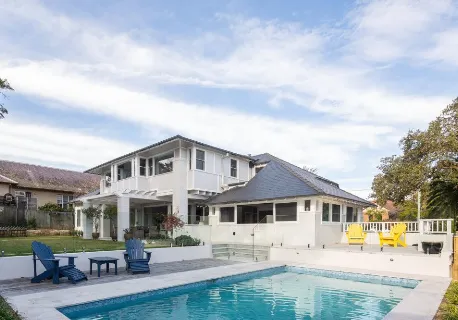
Freshwater
Concept: Creating a light, airy, character-filled three-level Hampton-style beach home on a small corner site

As Australians grapple with the challenges of climate change and rising energy costs, we’ve noticed that many of our clients are choosing energy-efficient home designs.
For those considering home alterations or new builds, you’ll have a lot of decisions to make, with the energy efficiencies of your home being one of them.
Understanding the features of energy-efficient homes and their benefits is a great place to start!

An energy-efficient home design, also referred to as a green home or a sustainable home, is designed with a larger focus on including features and designs that will not only look great, but will reduce the energy consumption homeowners will require once they’ve moved in.
Here in Australia, we use a scheme known as the Nationwide House Energy Rating Scheme (NatHERS) to assess homes and builds, rating the energy efficiency based on the design, construction materials and overall elements of the house.

As architects, we certainly love the challenge of incorporating energy-efficient elements into a modern style of home that looks like a dream and saves like a dream. They’re also a fantastic way to future proof your home.
When we’re designing an energy-efficient home, there are a number of sustainable architecture elements we will explore and recommend to our clients.
Insulation
Insulation is one of the key elements that will improve a home’s energy efficiency. So we’ll ensure the design of the home starts off with effective insulation in the roof and the walls and double-glazed windows.
Insulation will help regulate the temperature indoors, reduce the transfer of heat and also minimise the need for internal heating and cooling, which costs our clients both money and carbon footprint.
Solar panels
Australian weather is perfect for solar panels, especially in North Shore designs. So if it fits the brief, we like to suggest solar panels to reduce the customer’s reliance on the grid, lower their electricity bills and also generate clean, renewable energy.
Increased water efficiency
Including features like rainwater harvesting systems and grey water recycling can help you reduce the consumption of water and incorporate better management practices within the home.

We also consider several additional factors when planning a sustainable, energy-efficient home design that goes beyond what architects do.
This includes factors such as:

By far, one of the most appealing benefits of an energy-efficient home design is the cost benefits and potential for saving money, both during design and afterwards. These cost savings come from a range of places, such as:
When you consider the benefits and style that come with an energy-efficient home design, it’s no wonder we’re seeing more and more clients exploring and incorporating these features.
So if you’re curious about how sustainability and energy-efficient can feature in your build, whether you’re master planning your dream home or looking to maximise your land value, we can help.
Contact us today to get the conversation started.
Also known as a green or sustainable home, it’s designed to reduce energy consumption while ensuring comfort and aesthetic appeal. In Australia, the Nationwide House Energy Rating Scheme (NatHERS) assesses homes based on design, materials, and energy performance.
Key design elements include:
It’s part of a holistic philosophy. An energy-efficient home is also future-proof when paired with passive design, flexibility in layout, and adaptive systems. This ensures lower running costs, improved comfort, and long-term adaptability.

Inflation-driven interest rate hikes increase the cost of finance, making it more challenging and expensive for homeowners to proceed with renovations or additions.
As inflation pushes up the price of building materials and labour, renovation project costs escalate, complicating budgeting and cost control for homeowners.
Playoust Churcher recommends prioritising renovation goals early—whether that’s resale, lifestyle enhancement, or flexibility—and making conscious decisions that maximise value while managing limited resources.
Playoust Churcher recommends prioritising renovation goals early—whether that’s resale, lifestyle enhancement, or flexibility—and making conscious decisions that maximise value while managing limited resources.
Managing Director & Nominated Architect
NSW Architect Registration No. 5924
With over 30 years of architectural experience, Brett Churcher leads Playoust Churcher Architects with a rare combination of design expertise and commercial insight. As a registered architect and Managing Director, Brett has played a pivotal role in delivering high-end single residential homes and boutique medium-density developments across Sydney’s North Shore and beyond.
Brett’s unique strength lies in his deep understanding of both architectural design and the Sydney property market. His valuation background enables him to align creative vision with practical feasibility, ensuring each project achieves both aesthetic excellence and financial viability.
At Playoust Churcher, Brett drives the studio’s growth, strategy, and leadership, while remaining closely connected to what matters most: the client. His ability to see the bigger picture from a client’s perspective and to guide projects seamlessly through the design process is at the heart of his role and reputation.

Reach out to Brett to explore how Playoust Churcher can bring it to life—with clarity, creativity and confidence.

Concept: Creating a light, airy, character-filled three-level Hampton-style beach home on a small corner site
Concept: Adapting a beautiful family heritage home in a quiet street on a large site to suit the family’s lifestyle

Concept: Designing a new family home that maximises the views and introduces a sense of open space

Concept: A complex yet successful renovation of this stunning heritage home in a conservation area

Concept: A 1970s build transformed into a bright, open design maximising stunning harbour views

Concept: A complete rebuild of half the property over two levels, whilst also incorporating the property next door

Concept: A majestic holiday home that pushes the design envelop, blending sustainable materials and natural light


Concept: A major ground floor renovation of a large estate with a new three-car garage and 14 metre pool

© Copyright Playoust Churcher 2026 All rights reserved. Website by Brilliant Digital.
We live and work on the lands of the Gadigal people of the Eora nation. We acknowledge their traditional custodianship of the land and pay respects to their Elders past, present and emerging.