
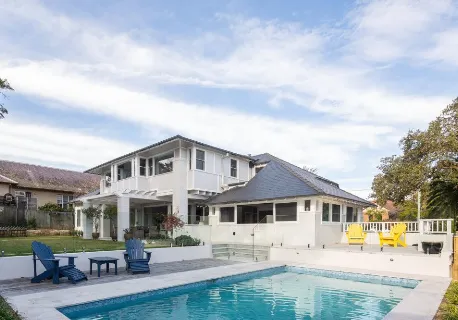
Freshwater
Concept: Creating a light, airy, character-filled three-level Hampton-style beach home on a small corner site
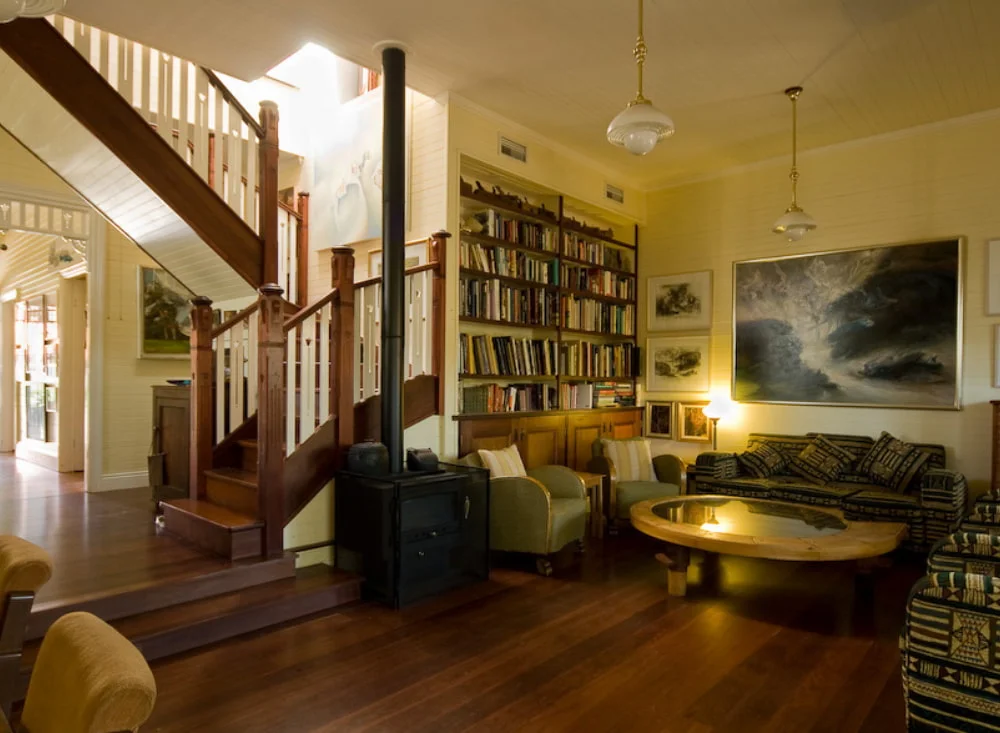
The era of open plan homes is still very much alive and well. Many of our clients who have invested in older style homes, or want to build brand new homes, have come to us with their visions to break down barriers and create multi-use open spaces, infused with light and air.
Open plan design has many benefits and certainly can bring the ‘wow’ factor to your home.
However, the global pandemic has brought to light some disadvantages to this design philosophy. Due to the changing needs of so many people, new questions are arising about what homes will look like in a post-COVID world.
These questions might not have clear answers, but opening the dialogue is an exciting part of home design evolution in the midst of a global pandemic.
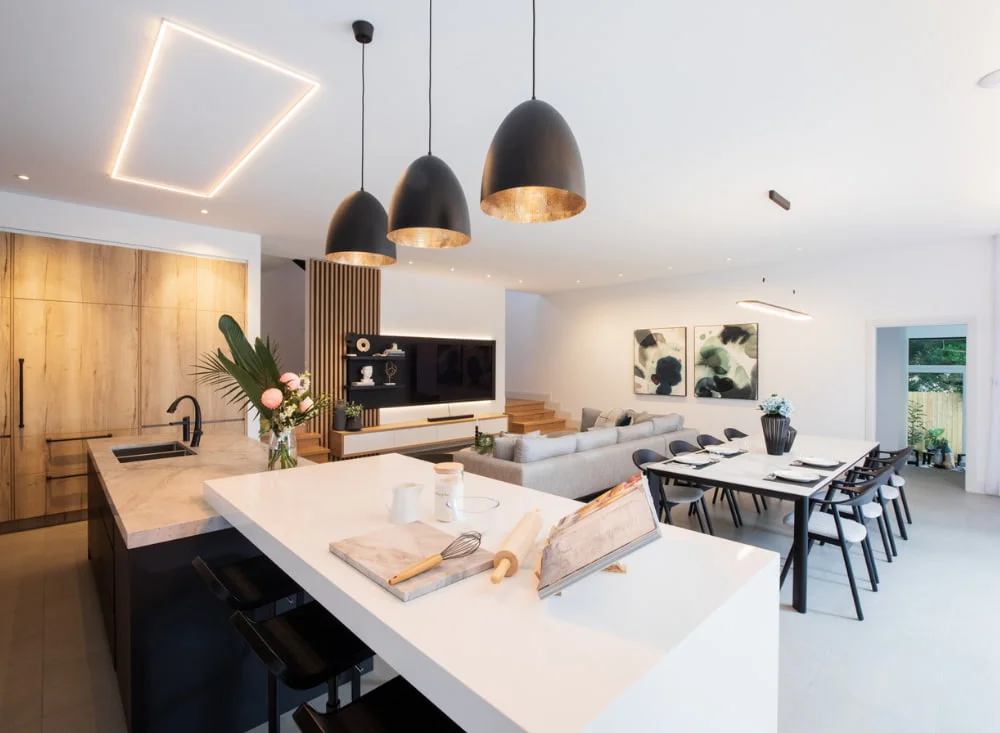
We all know by now what a typical stay-at-home day for an entire family looks like and what the struggles are.
With one or more parents working from home and kids receiving online education (and having to keep themselves busy when they’re not schooling), the family dynamic challenges the function of our existing living spaces.
Brett Churcher, architect at Playoust Churcher, explains: “With everything happening all at once in one open space, and especially in homes that aren’t large, we’re beginning to ask whether this concept of open plan living will still be relevant.
I don’t think we’re going to go back to little rooms situated towards the rear of the home… but we might look at other ways to zone spaces, like adding sliding doors to divide rooms, or repurposing one space for multiple uses.”

A thoughtfully designed home for two or more people working and living together can play a big role in fostering productivity, joy and an overall healthy life balance.
Ideally, Mum’s office and Dad’s workspace should remain separate, the same way a TV room or play area cannot also be a makeshift homeschooling room.
Rather than working from the dining table or an open space shared with the kids, by introducing repurposed spaces we can empower people to be just as productive from home as they would be in an office or school setting.
Up until recently, a couple living together would quite comfortably share one study. But now there is an increasing demand for two workrooms, one for each person.
We’ll also see design elements change… such as using more efficient window-glazing to reduce glare on computer screens.
Keeping these ideas of multi-use spaces in mind when designing or renovating your home will set you well on your way to having a home that not only fits your lifestyle, but enhances your productivity and wellbeing.
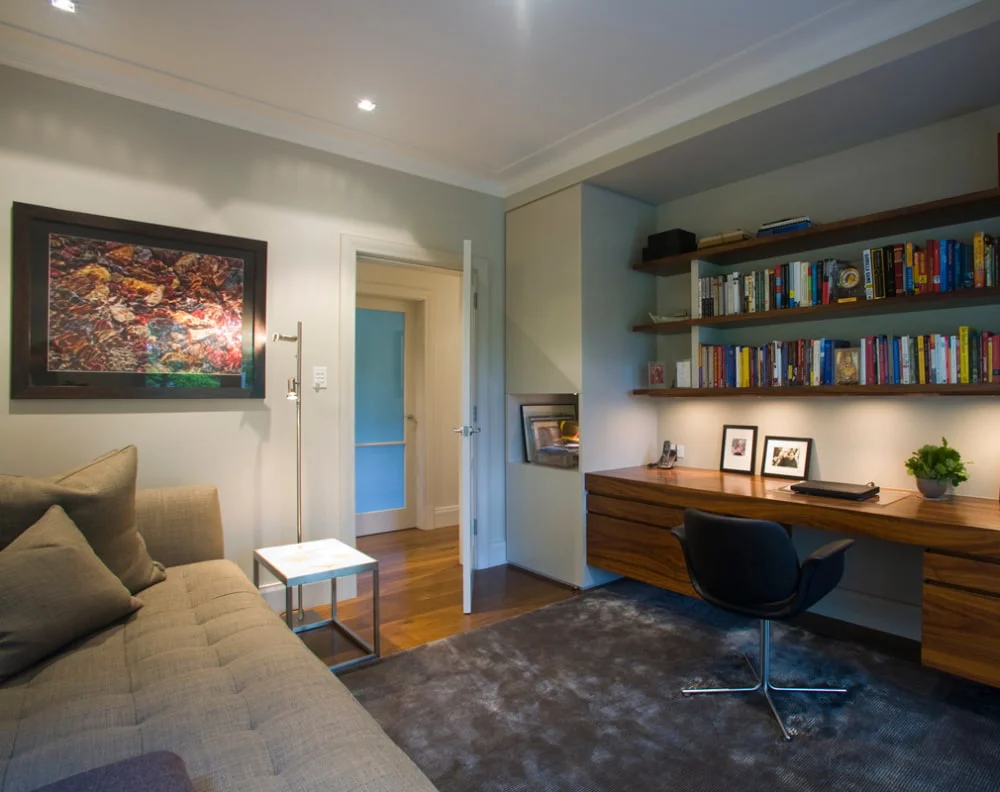
Two years ago, we might not have asked this question. We would just have absorbed noise, or dealt with it in the moment – whether it be loud music, kids playing or someone watching the game.
But with noise being an ongoing consideration with the increasing need for productivity at home, we now have to look at ways to zone off and soundproof key rooms. We’ll most probably see a return to walls with sound proof characteristics for reduction of sound transmission.
“Designs will certainly factor in the sound issue,” says Brett. “We’ll look at possibilities of having additional or annexed spaces that are made sound proof.
Teenagers don’t want to be stuck in their bedrooms when the rest of the home’s open spaces are used for other productivity purposes. For example, we’ll look at study zones that can be screened off and opened up when entertaining. Asking questions about where these areas will be located is crucial.”
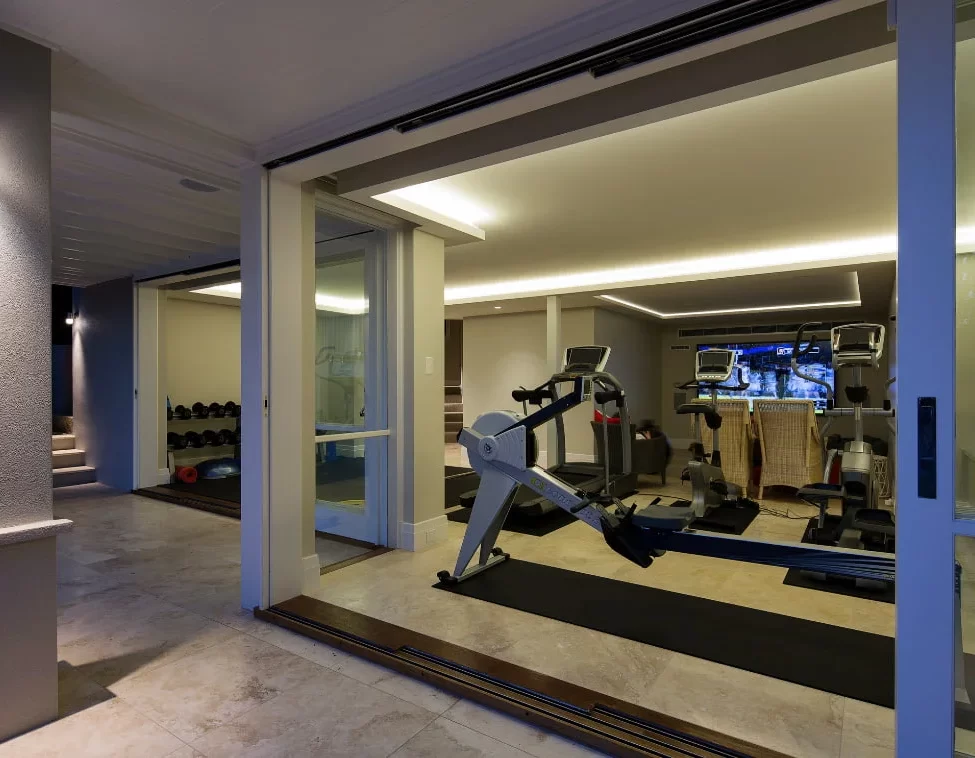
How do you deal with these changes in home design requirements if you don’t have considerable land size to work with?
While there’s no easy answer to this question, architects showcase their creativity in coming up with smart design solutions that could help solve the land size problem.
“We’re experiencing a shift in conversation around these changes in home design requirements. We’re also alert to the fact that house prices are going up, so there is no simple solution. In many cases, the global pandemic is causing older kids to stay at home well into their twenties. This also affects home design,” says Brett.
More questions are being asked around an increase in activities now done at home – like, ‘Do we need a home gym? Should we invest in a pool? Do we need a double garage if we’re not using two cars anymore?’
As conversations around home design shift, it’s becoming clear that flexibility is key in space planning and that we need to designate areas based on function.
At Playoust Churcher, we pride ourselves on our personalised and solutions-driven approach to home designs or renovation… and we really listen to what our clients want.
Talk to us today to discuss your dream home. Read more articles on our architecture design process.
While open-plan homes continue to deliver light-filled, flexible spaces, the pandemic exposed challenges when multiple family members work, learn, or relax in the same zone. Solutions include sliding doors or multi-use zones to retain connectivity while offering separation when needed.
Effective home design now includes separate, dedicated workspaces—one per person if needed. Features like anti-glare glazing and acoustically considerate finishes help make home offices productive and comfortable.
With the rise of homeschooling, Zoom calls, and varied activity, noise isn’t just background—it’s a design factor. Incorporating soundproofed annexes or screenable study zones helps maintain peace and flexibility.
When you can’t expand outward, adaptability becomes vital. Think multi-functional rooms—like a gym that can convert to a study—plus smart spatial planning, to support evolving lifestyle needs despite limited square meterage.

Accurate and detailed architectural documentation bridges the gap between your design dream and its tangible outcome—transforming the emotional journey you envisioned into every construction detail exactly as planned.
Documentation isn’t just boxes to tick—it powers two critical outcomes: meeting all statutory approvals and empowering builders to price and build confidently, reducing risk.
Well-crafted documents detail every material, finish, and interface, enabling builders to provide precise cost forecasts—helping avoid misinterpretation, design compromises, and budget blowouts.
Playoust Churcher stays engaged throughout the build—working alongside builders to address changes, uphold design intent, and ensure the result truly fits your lifestyle—with documentation as the central guide.
Managing Director & Nominated Architect
NSW Architect Registration No. 5924
With over 30 years of architectural experience, Brett Churcher leads Playoust Churcher Architects with a rare combination of design expertise and commercial insight. As a registered architect and Managing Director, Brett has played a pivotal role in delivering high-end single residential homes and boutique medium-density developments across Sydney’s North Shore and beyond.
Brett’s unique strength lies in his deep understanding of both architectural design and the Sydney property market. His valuation background enables him to align creative vision with practical feasibility, ensuring each project achieves both aesthetic excellence and financial viability.
At Playoust Churcher, Brett drives the studio’s growth, strategy, and leadership, while remaining closely connected to what matters most: the client. His ability to see the bigger picture from a client’s perspective and to guide projects seamlessly through the design process is at the heart of his role and reputation.

Reach out to Brett to explore how Playoust Churcher can bring it to life—with clarity, creativity and confidence.

Concept: Creating a light, airy, character-filled three-level Hampton-style beach home on a small corner site
Concept: Adapting a beautiful family heritage home in a quiet street on a large site to suit the family’s lifestyle

Concept: Designing a new family home that maximises the views and introduces a sense of open space

Concept: A complex yet successful renovation of this stunning heritage home in a conservation area

Concept: A 1970s build transformed into a bright, open design maximising stunning harbour views

Concept: A complete rebuild of half the property over two levels, whilst also incorporating the property next door

Concept: A majestic holiday home that pushes the design envelop, blending sustainable materials and natural light


Concept: A major ground floor renovation of a large estate with a new three-car garage and 14 metre pool

© Copyright Playoust Churcher 2026 All rights reserved. Website by Brilliant Digital.
We live and work on the lands of the Gadigal people of the Eora nation. We acknowledge their traditional custodianship of the land and pay respects to their Elders past, present and emerging.